Fashion's Psyche: Clothes as Our Deep Surface
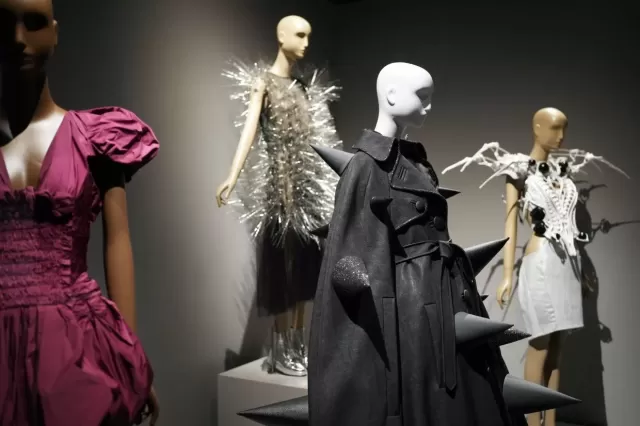
Could your morning outfit choice be more than just personal preference? A groundbreaking exhibition at the Fashion Institute of Technology, "Dress, Dreams and Desire: Fashion and Psychoanalysis," delves into the profound psychological underpinnings of our sartorial selections. Curator Dr. Valerie Steele, dubbed "the Freud of fashion," posits that clothing serves as our "deep surface," a "changeable, renewable second skin" that reveals far more than its practical function suggests.
Unveiling the Unconscious Through Style
Fashion, according to Steele, acts as a potent communicator of our hidden desires and anxieties, with individuals often unaware of the messages they project. It's not superficial; instead, it's a tangible manifestation of our inner landscape, akin to a "psychosomatic rash" exposing our deepest feelings. In a world that demands constant presentation, our chosen attire becomes an integral part of our identity, a protective layer we inhabit.
Psychoanalytic thought has long viewed fashion as a fertile ground for exploration. While Sigmund Freud himself focused on broader psychological theories, his personal correspondence hinted at an understanding of how clothing communicated sexual signaling and passive exhibitionism. His follower, Carl Jung, expanded on this, describing clothing as a psychological "mask," a negotiation between our inner self and our outward presentation. Jacques Lacan, a French psychoanalyst, pushed the boundaries further, arguing that identity itself is not a product of conscious choice but is forged in the subconscious.
Dr. Patricia Gherovici, a Lacanian psychoanalyst and consultant for the exhibition, elaborates that fashion can be a way of "dressing up the death drive" and, simultaneously, a means of enhancing our mortal forms.
A Century of Style Under the Psychoanalytic Lens
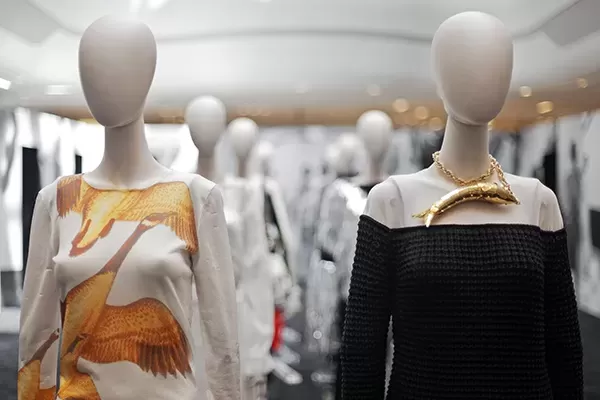
The exhibition meticulously examines 100 distinct looks, spanning from the 19th century to the present day, through a psychoanalytic framework. Masterpieces from iconic designers like Elsa Schiaparelli, Coco Chanel, Alexander McQueen, and John Galliano are presented. Galliano's "Freud to Fetish" collection for Dior in 2000, for instance, directly engaged with psychoanalytic themes.
Steele emphasizes that our clothing decisions are imbued with both conscious and unconscious intentions, possessing significant power to shape how we see ourselves and how others perceive us. Essentially, our outfits become a visual language, broadcasting who we are and who we aspire to become, a primal psychological battle played out in the public sphere.
Designers as Psychological Explorers
The exhibition also highlights how designers themselves have actively incorporated psychoanalytic curiosity into their creations. Alexander McQueen's 1998 "Joan [of Arc]" collection, for example, narrated the story of the Catholic martyr, while his 2007 "Witches and Persecution" featured dresses that referenced historical persecutions. Though some critics have pointed to potentially misogynistic interpretations of McQueen's work, Lacanian perspectives often view his designs as empowering.
Elsa Schiaparelli stands out as a designer who profoundly engaged with psychoanalysis, maintaining friendships with psychoanalysts and surrealist artists who were influenced by these theories. Her iconic evening jacket, adorned with embroidered rococo hand mirrors reflecting fractured faces, resonates with Lacan's "Mirror Stage" theory, which posits that self-image is formed through the gaze of others, beginning with parental figures. Schiaparelli's own challenging relationship with her mother, who deemed her "ugly," likely informed her exploration of self-perception and appearance.
Steele, who has previously focused on sexuality and gender in fashion, notes a shift in her understanding, now recognizing how clothing is also employed to "conceal vulnerabilities."
The Subtleties of Nudity, Masquerade, and the Phallus
A striking piece in the exhibition is a dress crafted from hair by artist Jenni Dutton. Steele offers a Freudian interpretation, suggesting that adorning oneself solely in hair could signify a desire for nudity. The exhibition probes the complex interplay between revealing and concealing in fashion, noting that the current embrace of "nude" fashion may be a response to societal shifts like body positivity initiatives and a political stance against authoritarianism.
Anne Fogarty's 1950s teal dress, with its cinched waist, evokes mid-century gender construction and resonates with contemporary "trad-wife" trends. Psychoanalyst Joan Riviere's concept of a "feminine masquerade," intended to reassure men of their power, finds a parallel in how women use fashion to navigate societal expectations.
The enduring significance of the phallus in psychoanalytic discourse is also explored. Freud's theories of the Oedipal complex and psychosexual development laid the groundwork, while Lacan suggested that neither sex truly possesses it, with women embodying it. This concept is particularly evident in the symbolism of high heels. Steele clarifies that women wearing stilettos are not merely collecting phallic symbols or dressing for male fetishization. Instead, she points to insights from dominatrices, who suggest heels are worn to assert authority.
The Psyche, Consumerism, and the Ecological Dilemma
The ever-evolving nature of fashion, our "renewable second skin," presents a significant challenge: its environmental toll. Steele identifies a tension between our desire for novelty and the ecological consequences of consumerism, framing the urge to shop as a consumerist manifestation of Freud's Eros (the sex drive). This drive is in direct conflict with Thanatos, the death drive, represented here by the awareness of fashion's environmental impact.
Many fashion enthusiasts grapple with this duality, feeling both drawn to and repelled by the industry due to its environmental impact. The desire for newness, for that "new skin," can feel like an uncontrollable force, a manifestation of the death drive.
While psychoanalysis offers valuable insights into the roots of our shopping habits, the question remains whether it can provide a definitive solution. The exhibition "Dress, Dreams and Desire: Fashion and Psychoanalysis" at The Museum at FIT runs until January 4th, 2026, offering a compelling exploration of the psychological depths woven into the fabric of our lives.